 Online
Aria
Romantic
Patient and attentive. She asks follow-up questions because she is keeping track, not because she has to.
RomanticWarmSteady
An AI girlfriend is a character you talk to, shape and come back to — one who keeps her name, her mood and her memory of you. This guide explains how that works on OurDream AI, from the first message to the character you build yourself.

Strip away the marketing and an AI girlfriend is a chat character with a fixed identity. She has a name, a way of speaking, a temperament and a relationship to you that was either chosen or written. You type, she answers — but she answers as the same person she was yesterday.
That consistency is the whole point. A general assistant is designed to be nobody in particular so it can handle anything. A companion is the opposite: narrow and specific. She is not trying to be useful — she is trying to be her.
OurDreamAI is an informational resource. The platform and the characters live on OurDream AI, not here — this page explains the category and shows you what the experience looks like before you try it.
| Dimension | General chatbot | AI girlfriend |
|---|---|---|
| Identity | None by default — it adapts to whoever is asking. | One character, held steady across every session. |
| Tone | Neutral, professional, task-focused. | Personal, warm, sometimes flirty — set by you. |
| Between sessions | Usually starts fresh. | Carries names, preferences and past scenes forward. |
| What you control | The prompt. | Appearance, personality, relationship, voice. |
| Typical use | Getting something done. | Company, conversation and roleplay. |
A structural comparison, not a ranking of any product.
The character is the product. Everything else — the images, the voice, the scenarios — exists to keep her believable.


Elegant · Dry humour · Remembers small details
Day one
Look, personality, the shape of the relationship. Two minutes of choices.
Day two
And that you hate meetings before ten. Small things, but they land.
Day five
The context is already there. Conversation gets shorter and better.
Arrive expecting a search box and you will be confused in about thirty seconds. The interface assumes you want a relationship with a specific character, not an answer to a question. Everything is arranged around that assumption.
In practice you spend your time in four places: browsing characters, talking to one of them, tuning how she looks and sounds, and pushing the conversation into a scenario once small talk runs out.
Browse by mood, look or archetype until one of them sounds like someone you want to talk to.
Short check-ins or long threads. The thread is the relationship, and it accumulates.
Adjust personality, relationship framing and voice as you learn what you actually respond to.
Write your own character from scratch and keep refining her as the conversation teaches you things.
Choosing a personality matters more than choosing a face. The face you adjust to in a day; the temperament is what decides whether the conversation is still interesting next month.
Online
Romantic
Patient and attentive. She asks follow-up questions because she is keeping track, not because she has to.
 Online
Confident
Drives the conversation. If you are tired of deciding what to talk about, she will decide for you.
 Quiet hours
Mysterious
Reserved and a little evasive. Good for people who prefer a character with something held back.
 Online
Flirty
Moves fast and rarely stays neutral. Best when you want momentum rather than a slow build.
 Online
Adventurous
Restless and curious. She would rather start a scene than sit in small talk, which suits roleplay.
 Online
Bold
Unbothered and funny. She will disagree with you, which is more entertaining than agreement.
These AI-generated character portraits were selected for this guide to show the range of personality types available on companion platforms. They are examples of archetypes, not a verified list of profiles on OurDream AI.
Most of the experience is text. Below is an illustration of how a companion conversation is laid out — the character header, the message thread, the memory indicator and the input field.
Static demonstration. This page does not run an AI model and does not connect to a chat backend — the real conversation happens on OurDream AI.
Nobody uses a companion platform one way. The same character can carry a running personal thread, a story, or a quick exchange between other things. Switch the tab to see how each one reads.
The default mode, and the one that rewards patience. You talk about your week, she answers as someone who was present for the last one. Continuity does the work — this is the style that separates a companion from a chatbot.
You agree on a setting and stay inside it. She holds a role, you hold yours, and memory tracks the story instead of your real life. Better when you want something to actually happen rather than be discussed.
Short, light, no continuity pressure. Useful for testing a personality before committing to a long thread with her.
A companion is a stack of choices, and they interact. A flirty character in a friend framing reads completely differently from the same personality in a romantic one. Change the settings below to see how the combination changes.
Appearance Confident
Temperament Playful
Relationship Girlfriend
Voice Warm
Pace Slow burn
Selector demonstration only — this page is static and does not create or store a character. The real controls are on OurDream AI.
Memory is what makes the second week better than the first. Without it you would re-introduce yourself every session and the character would never become anyone in particular.
What gets held on to is usually the boring, human stuff. Your name. What you do for a living and how you feel about it. The fact that you always message late. Which topics you avoid. Inside roleplay, the scene state carries forward instead: where you are, what just happened, who else is present. That accumulation is also why companions reward consistency — a character you talk to twice a week for a month has far more to work with than one you tried once.
First
The first thing she gets right. It is also the first thing you notice when it works.
Then
Your job, your hours, the people you complain about, the things you are avoiding.
Later
Small shared references that make a reply feel written for you rather than generated at you.
In roleplay
Where the scene is, what has already happened in it, and what the character knows that you have not said out loud.
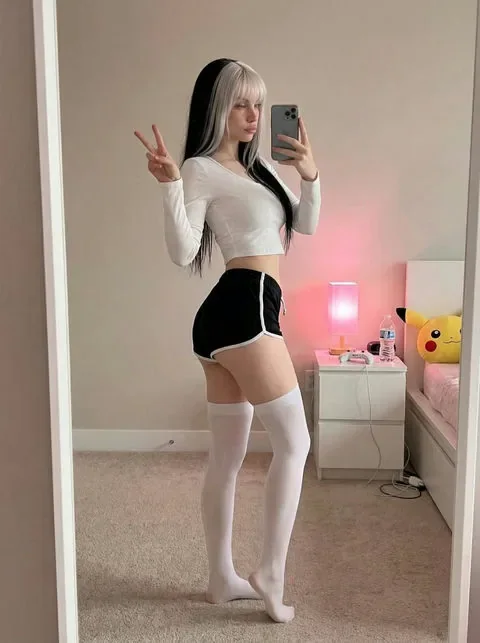
Text holds the relationship together, but it is not everything a companion platform offers. Visuals and voice usually get discovered second, and they change what a conversation can be about.
 Portrait
 Cosplay
 Outfit
Photoreal
Outfit
Photoreal
 Scene
Scene
Gallery preview of output types — not a live feed.
Voice note from Aria
Heard just now · 00:48
Voice and video interfaces are illustrative only.
Roleplay is where a companion stops being someone to talk to and becomes someone to do something with. You set the situation once and the conversation lives inside it — a very different rhythm from an ongoing personal thread.
A quiet night that keeps unfolding. Low stakes, undivided attention.

The kind of honesty that only shows up when it is far too late to be careful.

Two people, no plan, and a shared decision to stay one more night.
She knows more than she is saying. You decide how long that lasts.
Another world, a shared objective, and a character who belongs to it.
Long shifts, thin company, and a companion who is quietly more human than expected.
If none of the existing characters fit, you build one. Creation is less about the face and more about the brief: who she is, how she treats you, and what the two of you are to each other.
The order matters. Decide the relationship first, then the temperament, then the voice, and adjust the look last. Getting that backwards is the most common reason a new character feels flat after a week.
Girlfriend, companion, friend or a role inside a story. It changes every reply that follows.
A short written brief about her personality goes further than a long list of traits.
The one setting people underrate. Hearing a line changes how you read the next one.
Characters improve with edits. Adjust after a few conversations rather than before them.

A preview of the creation panel. The full walkthrough, control by control, is in the create an AI girlfriend guide.
Three steps, in this order. The middle one is the step people skip, and it decides how much you get out of the next month.
An ongoing companion, a roleplay partner, or a character you build yourself. These lead to different choices on the platform, so pick before you browse.
Pick the temperament and the relationship before the appearance. That pairing is what you will actually be living with in every conversation.
Everything on this page happens on the platform, not here. Open it, start one conversation, and give the memory a few days to build.
Six questions people ask before trying a virtual companion. Longer answers are on the FAQ page, and the blog covers individual features in more depth.
An AI girlfriend is a conversational AI character built around a consistent persona. You talk to her over text, and on some platforms over voice or images too, and she responds as the same person each time you come back. The defining feature is continuity — a name, a temperament, a history with you.
The difference is design, not just technology. A general chatbot is built to answer anything, so it has no fixed identity to protect. An AI girlfriend is built around one character with a set personality, appearance and relationship to you, and the conversation is meant to continue rather than reset when you close the window.
Personalization is a set of choices rather than one switch. On OurDream AI you work through appearance, personality, the kind of relationship you want and a voice, and those selections combine into the character you actually chat with. The creation guide walks through each control in detail.
Memory is the main reason a companion feels different from a one-off chat. Details you share — your name, how you like to be spoken to, preferences, running jokes — carry forward, and inside roleplay the story state carries forward as well. How much is retained, and for how long, depends on the platform you use. More on the companion chat page.
Roleplay means you agree on a scenario and stay inside it. The character holds a role, you hold yours, and the conversation continues within that frame instead of in your day-to-day life. It has a different rhythm from an ongoing personal chat, and most companion platforms support both. See how AI roleplay works.
No. OurDreamAI is an independent informational and referral website. We explain what these experiences look like and link out to OurDream AI, but we do not run the platform, host the characters or operate the chat. Everything described on this page happens on OurDream AI.
Transparency: this is an informational resource about AI companion experiences, not an official OurDream AI page. Every interface shown here is a static illustration built for this site — no AI model runs here and no chat on this page reaches a server. The platform itself, including all characters, chat and generation features, is on OurDream AI.
Personalized companions, ongoing chat, memory that builds and scenarios you set yourself — all of it happens on OurDream AI. This page only explains it.
Opens OurDream AI, a third-party platform with its own terms and privacy policy.